 Canadian Mission
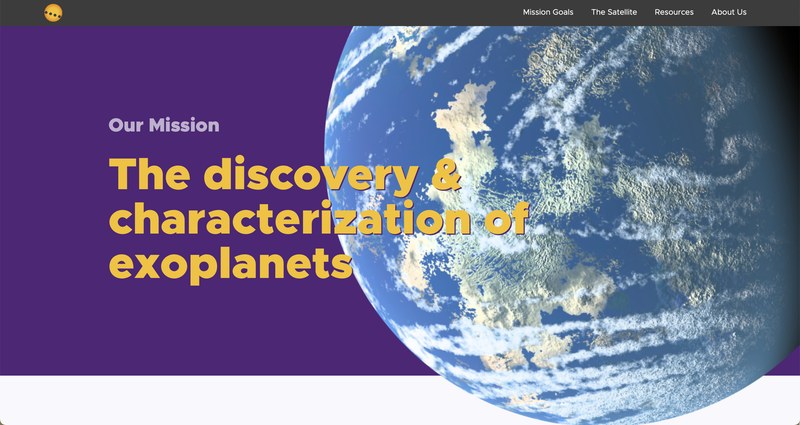
POET Mission
Photometric Observations of Exoplanet Transits — a dedicated Canadian microsatellite space mission concept designed to discover, track, and characterize alien atmospheres.
Professor of Physics & Astronomy at Bishop's University and NASA Exceptional Achievement Medalist. Twenty years turning flagship-mission archives — Kepler, JWST, and now Roman and Pandora — into exoplanet discoveries, paired with department leadership, government-facing science-policy work, and hands-on retro silicon engineering.
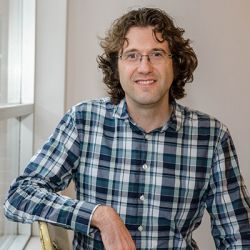
Leading observational programs and software pipelines to discover, model, and characterize exoplanets with NASA, the Canadian Space Agency, and international consortia — while directing science-policy and space-mission programs for the Canadian astronomy community.
From discovering planetary candidates with NASA's Kepler Space Telescope in California to leading the Canada Research Chair in Exoplanet Astrophysics in Quebec.
My primary research focuses on discovering and characterizing extra-solar planets. I specialize in precision transit photometry, transit timing variations (TTV) to measure planetary masses, and transmission spectroscopy to peer into alien atmospheres.
As a participating scientist on NASA's Kepler and K2 missions, I developed foundational pipelines for transit modeling and cataloging thousands of exoplanets that redefined our understanding of planetary architectures.
Based at Bishop's University in Lennoxville/Sherbrooke, Quebec, my lab holds a 2025 Resources for Research Groups award from the Digital Research Alliance of Canada — annual access to 2,408 core-years of compute and 100 TB of storage on the national rorqual system, valued at roughly $270,000 — plus a 2026 CFI John R. Evans Leaders Fund award expanding GPU capacity for Roman-scale transit searches.
I personally administer my group's on-campus infrastructure — a Proxmox virtualization cluster, pfSense firewall, TrueNAS backup/NFS storage, a JupyterHub server, and a GPU server for CUDA benchmarking — while mentoring undergraduate and graduate researchers on real-world space-mission data.
I chaired Bishop's Department of Physics and Astronomy (2022–2025), managing its full teaching and operating budget, and co-chaired the Joint Committee for Space Astronomy (JCSA), the principal advisory link between the Canadian astronomy community and the Canadian Space Agency.
I currently serve on the CASCA/ACURA TMT Advisory Committee and the ACURA board, helping steer federal investment in Canada's next-generation observatories — see the Leadership & Policy section below for details.
Beyond the stars, I am a passionate builder of retro-computing hardware, FPGA sound synthesis, and microcomputer architectures.
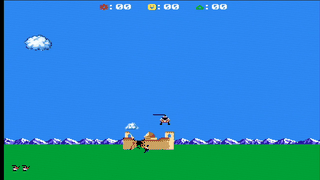
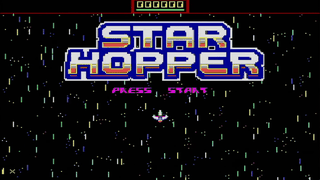
I actively write games and tools for the RP6502 Picocomputer, develop custom hardware cartridges for the Atari 2600/7800, synthesize classic Yamaha OPL2 audio on FPGAs, and publish open-source scientific code.
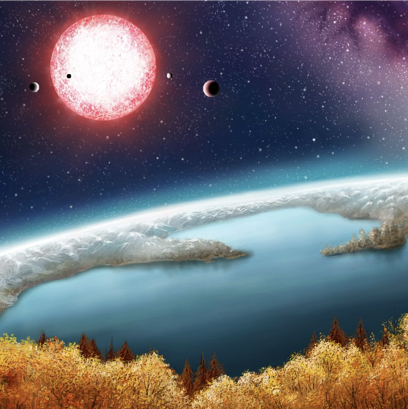
A crowning achievement in Kepler mission science: uncovering a rare seven-planet resonant system bathed in radiant heat.
In our updated Kepler candidate catalogue, we uncovered Kepler-385 (KOI-2433): one of only a handful of known systems with more than six confirmed planets. All seven planets are larger than Earth but smaller than Neptune, bathed in intense radiation from an F-type star 10% larger and 5% hotter than our Sun.
Active programs spanning flagship space telescopes, Canadian nanosatellites, and open-source scientific software.
Canadian Mission
Photometric Observations of Exoplanet Transits — a dedicated Canadian microsatellite space mission concept designed to discover, track, and characterize alien atmospheres.
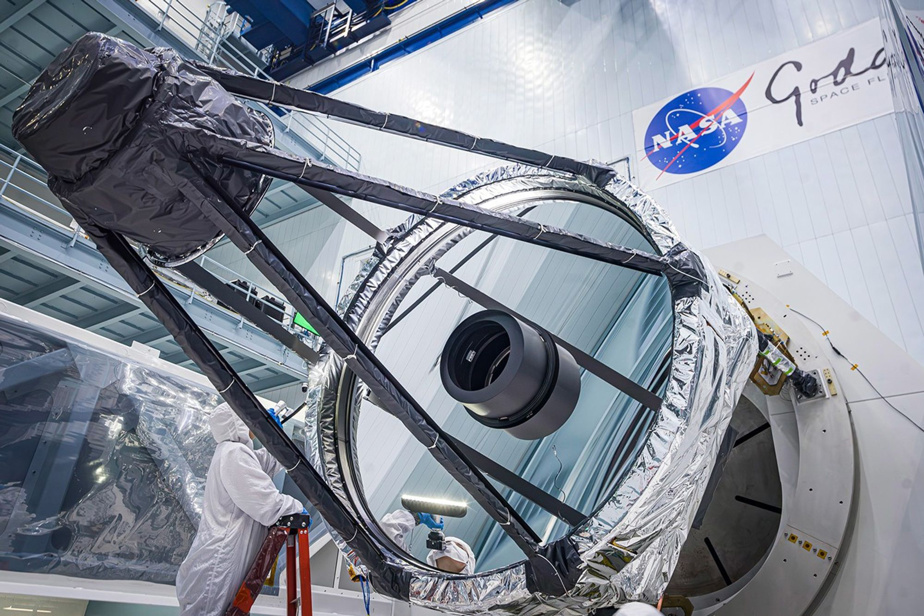 NASA Flagship Mission
Co-Investigator on an international $1.2M USD Community program to survey the Galactic Bulge for transiting planets (PI R. Wilson, University of Maryland, with Co-Is from STScI, NASA Goddard, JPL, and Caltech/IPAC). Leading the Canadian team's contribution and adapting my GPU-accelerated bls_cuda framework as its core detection code for a survey expected to discover up to 100,000 new exoplanets.
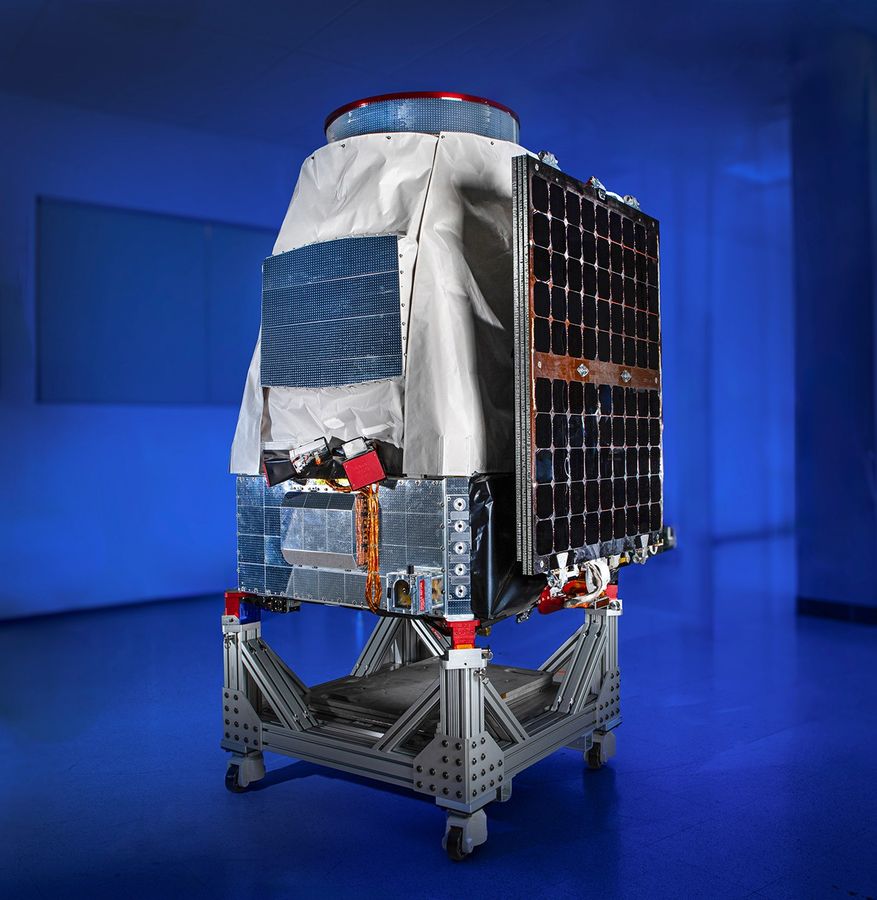 NASA Small Explorer
Co-Investigator running the mission's Auxiliary Science Program — community target selection, stellar characterization, and target-list curation — supported by a CSA ROSS grant renewed through 2028.
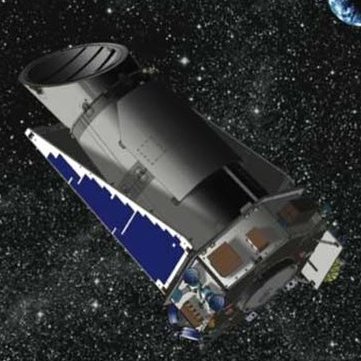 NASA Mission
Over a decade of foundational mission science: candidate vetting, transit fitting algorithms, planetary radius distributions, and multi-planet architectures.
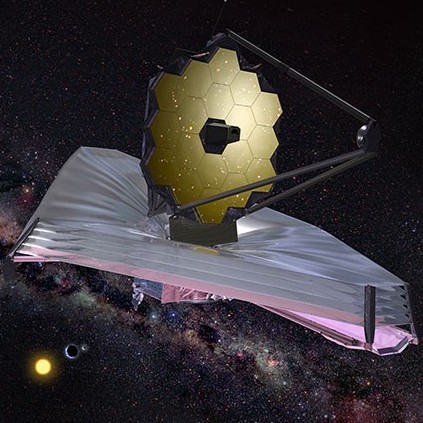 Flagship Observatory
Member of the Canadian NIRISS instrument team. Guaranteed Time Observations (GTO) extracting spectro-transits to probe atmospheres of transiting exoplanets.
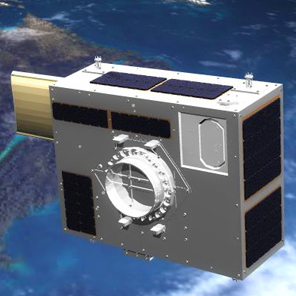 CSA Microsatellite
Extracting high-precision stellar photometry and studying comets, near-Earth asteroids, and transiting exoplanets using Canada's space surveillance satellite.
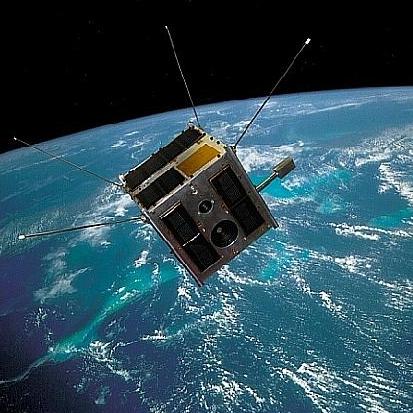 Nanosatellites
Fleet of optical nanosatellites performing continuous, high-precision photometry of the brightest stars in the night sky to understand stellar pulsation and structure.
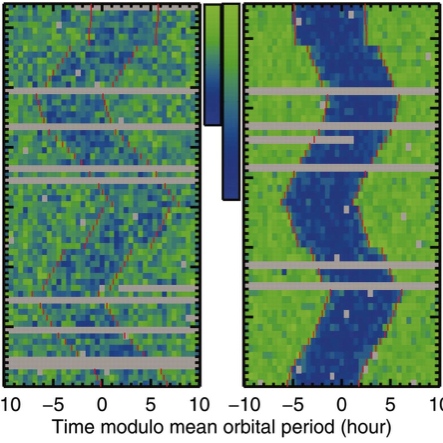 Orbital Dynamics
Gravitational perturbations between planets create minute deviations in transit timing, enabling mass and density measurements of planets without radial velocity data.
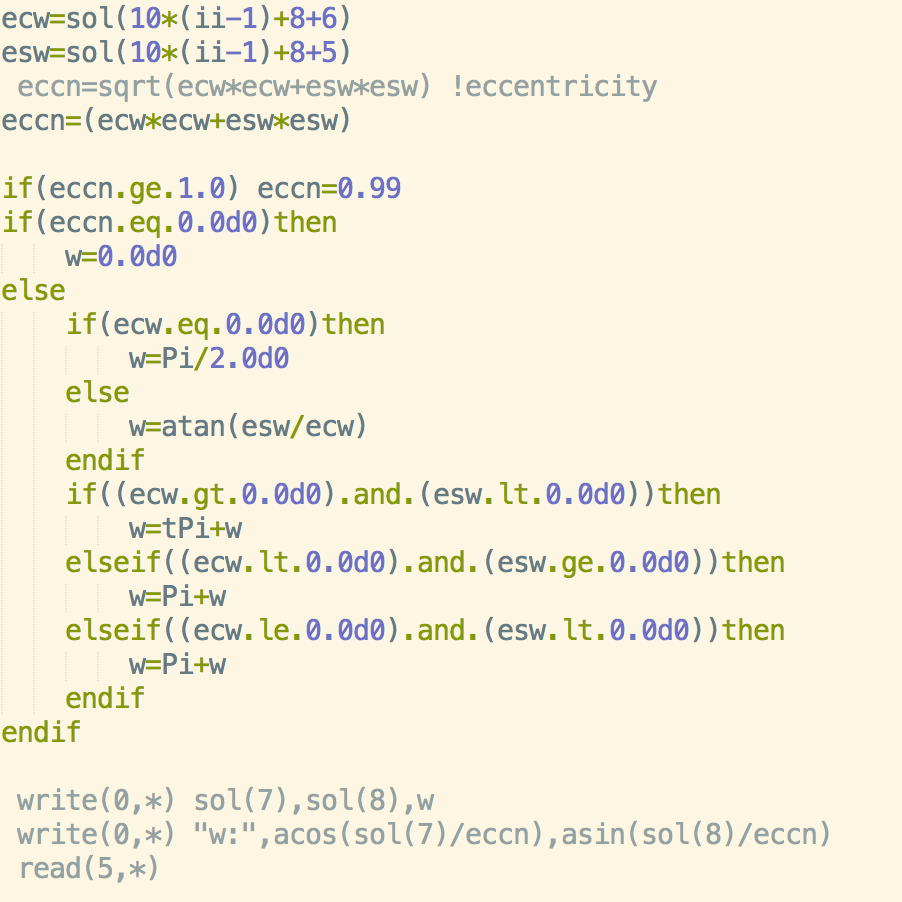 Open Source Pipeline
Open source Fortran and Python codebases developed to find, model, and manipulate planetary transits across large photometric datasets.
 High Performance Computing
High-performance N-body gravitational integrators written in Julia, and GPU-accelerated Box Least Squares (BLS) algorithms for rapid transit searches.
 Canada's Space Heritage
Microvariability and Oscillations of STars — Canada's first space telescope. Pioneered optical space photometry for asteroseismology and early exoplanet searches.
Direct experience managing budgets, personnel, and government-facing programs, alongside consensus-building for the Canadian astronomical community.
Dept. of Physics and Astronomy, Bishop's University. Managed the department's full operating budget — faculty/staff salaries, professional-development funds, lab and equipment procurement — while overseeing ~20 courses and ~200 students a year.
Principal advisory body between the Canadian astronomical community and the Canadian Space Agency. Drafted funding-priority recommendations and public biannual reports.
Advises the federal government on Canada's $200M investment in the Thirty Meter Telescope; liaises with project leadership, government, and community representatives.
Represents Bishop's University on a board of VPs of Research, university presidents, and industry representatives lobbying for federal funding of large-scale Canadian astronomy projects (e.g., SKA, CASTOR).
Negotiated a new collective-bargaining provision protecting full-time faculty research time against teaching load, ratified by both the faculty union and the university.
Personally responsible for full CSA/PSPC compliance on a $1.2M CAD government contract — the largest held by Bishop's University — including PEC reviews, TRL reporting, and IP disclosure.
Empowering students with hands-on astrophysics, astronomical instrumentation, and scientific programming.
Upper-level course covering stellar atmospheres, nucleosynthesis, exoplanetary transit dynamics, and modern cosmological models. Includes computational simulations in Python and Julia.
Course Materials & Data →Observational training using our campus telescope. Students conduct hands-on CCD photometry, astronomical image calibration, and stellar spectral analysis.
Department of Physics →Undergraduate and graduate students in my lab work directly with space mission data from Kepler, TESS, and JWST, co-authoring peer-reviewed publications.
Student Research Profiles →Awarded by NASA for groundbreaking development of exoplanet validation pipelines and candidate catalogs for the Kepler Mission.
Recognized by Clarivate Analytics / Web of Science as one of the world's most influential and frequently cited scientists.
Appointed Canada Research Chair in Exoplanet Astrophysics, with ongoing CFI research infrastructure funding.
Beyond the research program: I build custom hardware, 6502 assembly games, Yamaha OPL2 FM sound cards on FPGAs, and DIY Atari multicarts. You can play my retro games directly inside your browser right now!
Interested in graduate research, undergraduate internships, mission collaborations, or talking about exoplanet dynamics and retro silicon? Feel free to reach out.